
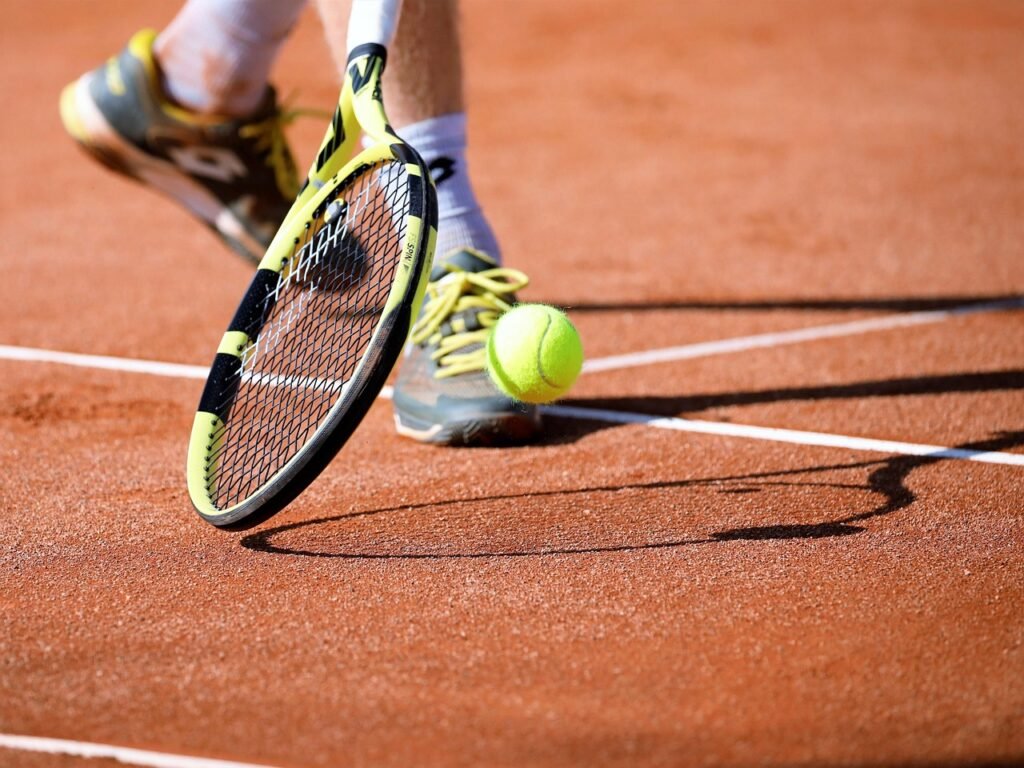
The ATP clay court season 2026 is the most eagerly anticipated stretch of the tennis calendar, compressing the Monte Carlo Masters, Madrid, Rome and Roland Garros into a seven-week window that reshapes the world rankings more dramatically than any other surface. For some players it represents their best opportunity to climb inside the top ten; for others it is a section of the schedule to be managed carefully before the grass season that follows.
This ranking breakdown identifies who enters the 2026 clay swing in the strongest position, which players are most likely to accumulate significant points, and our prediction for the Roland Garros 2026 men’s singles title.
ATP Clay Court Season 2026 Rankings: The Baseline Specialists to Watch
The clay court rankings picture in 2026 is shaped significantly by which players are defending large points hauls from the 2025 season. A player who reached the Roland Garros semi-finals in 2025 must at minimum reach the same stage in 2026 to maintain their ranking, creating an enormous pressure on those who peaked on clay last year to repeat those results in an increasingly competitive field.
The current world number one enters the clay season as the statistical favourite to accumulate the most points based on their historical performance on the surface. Their movement patterns and heavy topspin groundstrokes suit the high-bounce clay courts better than almost any other player in the current top twenty, and their first-serve percentage on clay consistently outperforms their hard-court equivalent.
For a complete picture of where every player stands in the ATP rankings heading into this stretch, our ATP rankings 2026 breakdown covers the full top ten in detail with surface-by-surface performance analysis.
ATP Clay Court Season 2026: Ranking the Top Contenders
- The dominant baseline player of the current generation enters Monte Carlo as the form favourite and has won at least one clay Masters event in each of the last four seasons, a consistency that no other active player can match.
- Carlos Alcaraz has demonstrated the clay court movement and shot selection required to challenge for every title in this stretch and is the most likely candidate to end any rival’s dominance on the surface in 2026.
- Jannik Sinner’s clay game has evolved significantly in the last eighteen months, with his improved footwork and heavier topspin backhand making him a genuine threat at Roland Garros for the first time in his career.
- Alexander Zverev’s historical clay record places him consistently among the top four contenders at every Masters event on the surface, though his Roland Garros record in the final specifically represents an unresolved challenge.
- Stefanos Tsitsipas remains the most reliable clay court specialist outside the absolute elite, with a game built around the patterns that the red dirt rewards most consistently.
- The emerging next generation of clay court players — several of whom are breaking into the top forty in the current rankings — represent a genuine upset threat at the earlier Masters events where draw depth is more forgiving.
Full draw results, rankings updates and match schedules across every 2026 clay court event are available on the official ATP Tour website throughout the season.
Roland Garros 2026: Why This Year’s Edition Could Be the Most Competitive in a Decade
Roland Garros 2026 arrives at a moment of genuine generational competition on the men’s side. The era of one player dominating the French Open draw with minimal challenge has passed, and the current top ten contains at least five players with realistic paths to the title depending on draw positioning and match scheduling across the fortnight.
Surface speed at Roland Garros has been a point of ongoing discussion in the sport, with subtle changes to the clay composition in recent years producing a slightly faster surface than the tournament historically offered. That shift marginally favours all-court players over pure baseliners, potentially opening the door for players who would previously have been considered unlikely champions in Paris. Historical Roland Garros statistics and player surface records are comprehensively tracked at Tennis Abstract, the most detailed independent tennis statistics database.
ATP Clay Masters 2026: Monte Carlo, Madrid and Rome Preview
The three Masters events before Roland Garros each serve a different purpose in the clay season preparation. Monte Carlo is the traditional opener where players find their clay legs and manage physical conditioning after the hard-court swing. Madrid brings altitude conditions that affect ball flight and bounce significantly, creating a surface that plays faster than standard clay and often produces surprising results.
Rome is the final major preparation before Paris, traditionally the event where the genuine Roland Garros contenders confirm their form or expose their vulnerabilities. A champion at the Internazionali BNL d’Italia almost always features in the latter stages of Roland Garros the following fortnight, making Rome form data particularly predictive. All our clay court season coverage is collected in our tennis analysis section as the 2026 swing unfolds.
ATP Clay Court Season 2026 Predictions: Our Roland Garros Pick
Carlos Alcaraz represents our pick for the Roland Garros 2026 title. His physical gifts on clay — the sliding footwork, the forward pressing movement, the ability to create angles from seemingly impossible defensive positions — are uniquely suited to the surface demands of the Paris fortnight. The level of competition he will face across the draw is genuinely the highest it has been for any Roland Garros in recent memory, but Alcaraz at his best on clay is a level above any of his current rivals.
Key Takeaways
Here is what you need to remember about the ATP clay court season 2026:
- The clay season runs across seven weeks from Monte Carlo through to Roland Garros in late May 2026.
- Points defence pressure shapes the rankings picture significantly — last year’s semi-finalists must repeat those results to stand still.
- Carlos Alcaraz and the current world number one are the two most likely Roland Garros finalists.
- Rome form is the single strongest predictor of Roland Garros success across recent seasons.
- Surface speed changes at Roland Garros in recent years have marginally benefited all-court players over pure baseliners.
Frequently Asked Questions
When does the ATP clay court season 2026 start?
The ATP clay court season 2026 begins with the Monte Carlo Masters in mid-April. The clay swing continues through the Madrid Open and Rome’s Internazionali BNL d’Italia before culminating with Roland Garros at the end of May and into early June 2026.
Who is the favourite for Roland Garros 2026?
Carlos Alcaraz enters Roland Garros 2026 as one of the leading favourites based on his clay court movement, shot-making ability, and improving consistency across the full two-week format of a Grand Slam. The current world number one is the other primary favourite based on their historical clay court dominance.
How does the Monte Carlo Masters format work?
The Monte Carlo Rolex Masters is an ATP Masters 1000 event played on outdoor clay in the Principality of Monaco. Top seeds receive first-round byes and enter in the second round. The draw consists of 56 players, with the tournament played over two weeks. Points awarded range from 1000 for the champion down to ten for first-round losers.
Why is clay considered the slowest tennis surface?
Clay courts are considered the slowest surface in tennis because the clay particles absorb energy from the ball on impact, reducing pace and creating a higher, slower bounce than hard courts or grass. This longer rally dynamic favours players with physical endurance, heavy topspin, and superior defensive sliding movement.