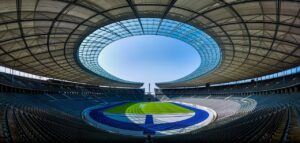

Twenty-eight days. That is all that stands between you and the greatest sporting event on the planet. The 2026 FIFA World Cup kicks off on June 11 at the legendary Estadio Azteca in Mexico City, and for the first time in 32 years, the world cup 2026 guide every football fan needs covers a tournament happening in your backyard — across the United States, Canada and Mexico. This is bigger than anything that has come before it. Forty-eight teams. One hundred and four matches. A prize pool of $727 million. And, almost certainly, Lionel Messi’s last dance.
- 2026 FIFA World Cup runs June 11 to July 19 across 16 cities in the USA, Canada and Mexico
- 48 teams compete across 12 groups — a new Round of 32 adds an extra knockout game
- The final is at MetLife Stadium, New Jersey on July 19 — the USA, France and England are the tournament favourites
Why This World Cup Is Different From Every Other
FIFA expanded the tournament from 32 to 48 teams for 2026. That sounds like a small tweak. It is not. The extra 16 teams mean 40 additional matches, a brand new Round of 32 knockout round, and a group stage that now features 12 groups of four rather than eight groups of four. Teams must now survive one more knockout game to reach the final — an enormous test of squad depth.
There is also a bracket redesign that most fans have not noticed. FIFA created two separate pathways to the semi-finals. The logic: the top two ranked teams — Spain and Argentina — were placed in opposite halves of the draw. So were France (No.3) and England (No.4). Should all four sides win their groups, they cannot meet until the semi-finals. It is the kind of structural decision that shapes the entire narrative of a tournament before a ball is kicked.
One more change worth knowing: every match will include mandatory three-minute hydration breaks midway through each half. FIFA frames it as a concession to summer heat. In practice, it also gives broadcasters an additional advertising window. Innovative? Cynical? Probably both.
The 2026 World Cup Format: How It Actually Works
The group stage runs from June 11 to June 27. Twelve groups of four teams each play three matches. The top two from every group advance, plus the eight best third-placed teams — giving 32 teams entry into the knockout bracket. The Round of 32 opens on June 29, and from that point every game is sudden death. Extra time, then penalties if needed.
There are four games per day during the group stage, six per day when group finishes are decided simultaneously on June 24-27. Kickoff times span noon ET to midnight ET for US viewers. The quarter-finals fall on July 8, with the final on Sunday July 19 at MetLife Stadium in East Rutherford, New Jersey. As FIFA.com notes, the prize pool totals $727 million, with the winning nation taking $50 million.
A key nuance: the new bracket means that if Messi’s Argentina and France’s Kylian Mbappé — who already has 12 World Cup goals, tied sixth all-time with Pelé — both win their groups, they are in different halves of the draw and will not meet until the semi-final at the earliest. For fans who dreamed of a Messi-Mbappé final, the bracket makes it structurally possible but not guaranteed.
Groups to Watch: The Ones That Will Define the Tournament
Group D — USMNT’s Proving Ground: The United States drew a manageable field with Paraguay, Australia and Turkey. Opening June 12 at SoFi Stadium in Inglewood under coach Mauricio Pochettino, the Americans have genuine knockout-stage potential. Christian Pulisic and Weston McKennie lead a generation widely regarded as the most talented USMNT squad since 1994. Our ranking of the top 10 goalscorers heading into the tournament shows Pulisic in a compelling bracket position.
Group C — Brazil Under the Spotlight: The five-time champions open against Morocco at MetLife Stadium on June 13. Under Carlo Ancelotti, Brazil face the unresolved question of Neymar — their all-time leading scorer, but a player who has spent years battling injuries. Ancelotti has been public about the difficulty of the selection call. Seven of the previous eight World Cups played in the Americas have been won by South American teams. Brazil know the numbers.
The Iceland Wildcard and the Dark Horses: Norway, with Erling Haaland finally on a World Cup stage after a 28-year national absence, are the tournament’s most intriguing side. Haaland is one of the most clinical strikers on the planet, and Norway are priced at long odds that do not reflect how dangerous they genuinely are. Colombia (40-1), Uruguay (50-1) and Ecuador (66-1) are the South American sleepers worth watching.
The Stars Who Could Define Summer 2026
Lionel Messi turns 39 on June 24 — mid-tournament. This is almost certainly his final World Cup. Argentina are reigning champions. The last time a defending champion won back-to-back titles was Brazil in 1958 and 1962. History is against them, but Messi has never cared much for historical precedent.
Kylian Mbappé arrives with 12 World Cup goals already to his name, one behind Pelé on the all-time list. He needs five to break Miroslav Klose’s men’s record of 16. France are third-favourites to win the whole thing. Mbappé could leave Paris with a record that stands for a generation.
At 41, Cristiano Ronaldo is on course to become the first male player ever to appear in six World Cups. That fact alone — regardless of Portugal’s chances — is worth pausing on. Luka Modrić of Croatia will also be at his fifth tournament at 40, assuming recovery from cheekbone surgery comes in time.
The young generation to watch: Pedri (Spain), Gavi (Spain), Jamal Musiala (Germany), Florian Wirtz (Germany) and Bellingham (England) all arrive under 24 with the talent and big-game experience to become the tournament’s defining young star.
How to Watch the 2026 World Cup
For US viewers, Fox and FS1 carry every match in English, with Fox One streaming the entire tournament. Telemundo and Universo handle the Spanish-language broadcast, with Peacock streaming that feed. There is no blackout issue here — every game is accessible via streaming if you do not have cable.
UK viewers should check BBC and ITV, who will share rights across the group stage and knockout rounds. Outside the US and UK, coverage varies by territory — check the FIFA broadcast rights directory for your country.
Tickets, Fan Fests and Getting There
Group stage tickets are priced from $120 to $350 at the low end, with knockout match tickets climbing sharply: quarter-finals from $250, semi-finals from $600, the final from $1,000 minimum. Buying only through official FIFA channels matters — the resale market around major tournaments attracts serious fraud.
Fan Fests are free-entry public events in every host city. Philadelphia’s is at Lemon Hill in Fairmount Park, open daily June 11 to July 19. Dallas holds its Fan Fest at Fair Park for every match at the renamed Dallas Stadium (AT&T Stadium). Registration is encouraged at most festival sites.
The multi-country format creates one logistical challenge: matches in the US, Canada and Mexico mean some fans following their team through the group stage will need to cross two international borders. Entry rules differ between all three countries, and a World Cup ticket does not automatically simplify visa requirements for non-citizens.
Our Take: Who Wins the 2026 World Cup
Our view at Unicorn Blogger is that this World Cup is France’s to lose. Mbappé is in the form of his life, the squad is younger and more cohesive than it was at the 2022 final, and the bracket construction keeps the two likely semi-final opponents separated. Spain have the best collection of under-25 talent in international football right now, and if their midfield stays fit they are the tournament’s best team on paper. England are dangerous — and for the first time in decades, the pressure to finally win something tangible is being met by a squad that actually might.
Brazil are our South American pick. Ancelotti’s coaching pedigree at knock-out tournaments is unmatched, the squad is deep enough to survive the Round of 32 format, and the South American record in Americas-hosted tournaments is hard to ignore. Inter Milan’s 2025-26 season showed what elite squad depth looks like when properly managed — Brazil under Ancelotti carry the same structural logic.
Frequently Asked Questions
When does the 2026 World Cup start? June 11, 2026, with Mexico hosting South Africa at the Estadio Azteca in Mexico City.
How many teams are in the 2026 World Cup? 48 teams, up from 32 in previous editions. They are divided into 12 groups of four.
Where is the 2026 World Cup final? MetLife Stadium in East Rutherford, New Jersey on July 19, 2026.
Is Messi playing in the 2026 World Cup? Yes. Messi will be 39 by the time of the final, and this is expected to be his last World Cup with Argentina.
Who is the favourite to win the 2026 World Cup? France and Spain are the sportsbook leaders, with Brazil and England close behind.