
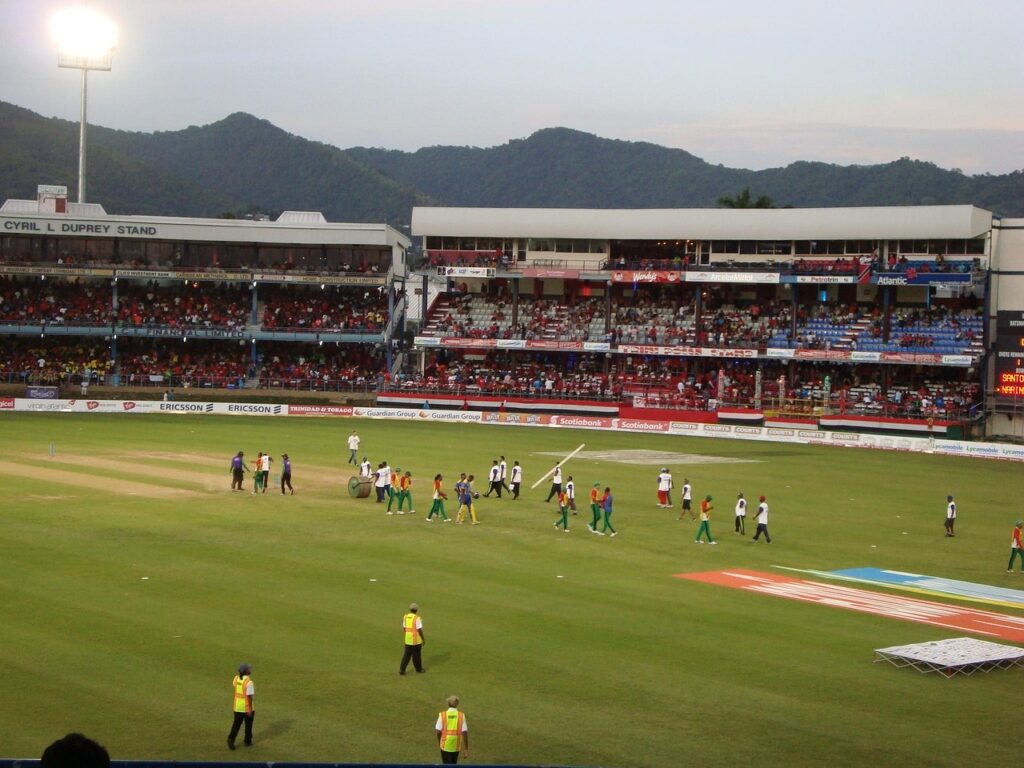
Few things in cricket cause as much confusion as the moment rain stops play and a new target suddenly flashes up on the screen. The system behind that revised number is the DLS method, short for Duckworth-Lewis-Stern, and while it looks like impenetrable mathematics, the idea underneath it is genuinely simple and fair. This guide explains exactly how it works, what a par score is, where the method came from, and why it almost always gets the calculation right.
The DLS method recalculates targets in rain-affected limited-overs matches by treating each team’s innings as a set of two resources: overs remaining and wickets in hand. When rain costs a team overs, it loses resources, so the target is adjusted in proportion. The chasing team’s revised target equals the first team’s score multiplied by the ratio of the two teams’ resources, plus one run.
What the DLS Method Actually Is
At Unicorn Blogger we think the reason DLS intimidates people is that the output, a precise revised target, hides a very intuitive principle. The DLS method works on the idea that a team batting in a one-day international starts with two resources in hand: its overs, which in a 50-over game means 300 balls, and its ten wickets. As the innings goes on, both resources steadily drain away. They hit zero when a team either uses up all its overs or loses all ten wickets.
When rain forces overs to be cut, a team is denied the chance to use all the resources it began with. DLS measures exactly how much of that resource was taken away and adjusts the target so that both teams are asked to do an equivalent amount with the resources they actually had. That is the whole concept. Everything else is just the table of numbers that turns it into a precise figure.
How the Calculation Works, Step by Step
Here is where we walk through it properly, because once you see the logic the scoreboard stops being a mystery. Every combination of overs remaining and wickets lost corresponds to a percentage of resources. A team at the very start of a 50-over innings has 100% of its resources. A team with only 30 overs left and no wickets down has roughly 75%. A team with a handful of overs and most of its wickets gone has very little left at all. These figures come from decades of scoring data and are published in resource tables.
The core formula is straightforward. The team batting second’s par score equals the first team’s score multiplied by the ratio of the second team’s resources to the first team’s resources. Add a single run and you have the winning target. If the chasing side has fewer resources than the team that batted first, its target shrinks; in the rarer case where it somehow has more, the target is scaled up instead. The plus-one exists for a simple reason: to win, the chasing team must do better than merely matching the first innings, not just equal it.
Team A bats first and makes 269 for 8 from its full 50 overs, using 100% of its resources. Rain then cuts Team B’s innings to 30 overs before it starts, leaving it with about 75% of the resources. Team B’s revised target becomes roughly 269 x 0.751, which is about 202.75, rounded up to a target of 203. Team B now needs 203 in 30 overs rather than chasing 270 in 50.
Par Score vs Target: The Key Difference
Two terms get used interchangeably by commentators but mean slightly different things, and knowing the distinction makes rain rules far easier to follow. The par score is the total a chasing team should have reached, for the number of wickets it has lost, at the exact moment of an interruption. If the team is sitting precisely on the par score when the rain comes and the match is abandoned, the result is a tie. The target, by contrast, is the full revised number a team must reach to win once its overs have been reduced, and it is always the par score plus one run.
This is why you will sometimes see a result described as a team winning by a number of runs on the DLS method even though no further play happened. It simply means that when the match was called off, the batting side was that many runs ahead of the par line.
A Short History of the Rain Rule
To appreciate why DLS is so respected, it helps to remember what came before it. The earliest approach was the Average Run Rate method, which simply compared run rates and ignored how many wickets a team had in hand, a huge flaw. It was followed by the notorious Most Productive Overs method, which produced one of the most infamous moments in cricket history at the 1992 World Cup, when rain left South Africa needing an impossible 22 runs off a single ball in their semi-final against England. That farce made the case for something better undeniable.
The English statisticians Frank Duckworth and Tony Lewis devised their resource-based system to fix exactly these problems. It was first used in a match between Zimbabwe and England on New Year’s Day in 1997 and adopted as the ICC’s official method for rain-affected one-day games in 1999. In 2014 the Australian academic Steven Stern refined the formula to reflect the higher scoring rates of the modern game, and the method was renamed Duckworth-Lewis-Stern in his honour. The principle, though, has stayed the same throughout.
Standard Edition vs Professional Edition
There are two versions of DLS in use, and the difference matters. The Professional Edition is a computer-based calculation used in all international and major professional cricket. It handles unusually high first-innings totals far more accurately and is the version you see applied in televised matches. The Standard Edition is a simpler, manual version based on a single printed resource table, designed for lower levels of the game where a computer and the official software may not be available. Both rest on the same resource principle; the Professional Edition is just more precise at the extremes.
Criticisms and the Strategy It Creates
DLS is widely accepted as the fairest system yet devised, but it is not above criticism. Its biggest drawback is complexity: very few fans can calculate a target in their heads, which leaves crowds relying entirely on the scoreboard. It can also produce results that feel counter-intuitive in the moment, particularly in matches with multiple interruptions.
The method also shapes tactics. Because wickets in hand are treated as a resource, a batting side that senses rain is coming is wise to preserve wickets rather than throw the bat, since being only a couple of wickets down protects far more resource value than a slightly higher score with more wickets gone. Smart captains read the weather and adjust their risk accordingly, which is part of what makes a rain-threatened run chase such an absorbing tactical puzzle.
How DLS Works in T20 Cricket
The same principle drives DLS in Twenty20, but the maths moves much faster because the resources are smaller. Instead of 300 balls, a T20 side begins with just 120, so every over lost represents a far larger slice of the innings. A single rain break that costs a few overs can swing a T20 target dramatically, which is why these calculations feel so brutal in the shortest format. There is also a minimum-overs rule before a result can stand. In a Twenty20 international, each side must face at least five overs for DLS to produce a valid result, while in a one-day international the threshold is twenty overs per side. If a washout prevents even that minimum, the match is declared a no-result rather than being decided by the method. This safeguard exists because there simply is not enough cricket in a handful of overs to judge two teams fairly.
Famous DLS Moments and Controversies
No explanation of the rain rule is complete without the cautionary tale that every cricket fan should know. At the 2003 World Cup, South Africa faced Sri Lanka in a must-win group game at Durban with rain closing in. The South African dressing room worked off a Duckworth-Lewis par sheet, and as the storm arrived Mark Boucher blocked what he believed was a match-clinching delivery, then celebrated. The problem was that the figure he had been given was the par score for a tie, not the target for a win. South Africa finished exactly level with par, the game was tied, and the host nation was knocked out of its own World Cup by a single run it never tried to score.
The episode is the perfect illustration of why understanding par versus target matters so much, and why teams now station an analyst with live DLS figures during every rain-threatened chase. More broadly, DLS has occasionally drawn complaints when high-scoring first innings meet sharp reductions in the second, which is precisely the scenario the Professional Edition was designed to handle better. Even its critics, though, concede that no rain rule in the history of the sport has been fairer or more rigorously grounded in actual scoring data.
How to Read the DLS Scoreboard Live
Watching a rain-threatened chase becomes far more enjoyable once you know what to look for on the broadcast. During any interruption-prone second innings, the score graphic will usually display a small DLS par figure alongside the live total, telling you whether the batting side is currently ahead of or behind the game. If the chasing team is above that par number when rain ends play for good, they win; if they are below it, they lose; and if they are exactly on it, the match is tied. Keep an eye on the wickets column too, because a single dismissal can shift the par line by several runs in an instant. Once you start tracking that par figure ball by ball, you are effectively reading the match the same way the two dressing rooms are, and the tension of a weather-affected finish suddenly makes complete sense.
How DLS Works in T20 Cricket
The same principle drives DLS in Twenty20, but the maths moves much faster because the resources are smaller. Instead of 300 balls, a T20 side begins with just 120, so every over lost represents a far larger slice of the innings. A single rain break that costs a few overs can swing a T20 target dramatically, which is why these calculations feel so brutal in the shortest format. There is also a minimum-overs rule before a result can stand. In a Twenty20 international, each side must face at least five overs for DLS to produce a valid result, while in a one-day international the threshold is twenty overs per side. If a washout prevents even that minimum, the match is declared a no-result rather than being decided by the method. This safeguard exists because there simply is not enough cricket in a handful of overs to judge two teams fairly.
Famous DLS Moments and Controversies
No explanation of the rain rule is complete without the cautionary tale that every cricket fan should know. At the 2003 World Cup, South Africa faced Sri Lanka in a must-win group game at Durban with rain closing in. The South African dressing room worked off a Duckworth-Lewis par sheet, and as the storm arrived Mark Boucher blocked what he believed was a match-clinching delivery, then celebrated. The problem was that the figure he had been given was the par score for a tie, not the target for a win. South Africa finished exactly level with par, the game was tied, and the host nation was knocked out of its own World Cup by a single run it never tried to score.
The episode is the perfect illustration of why understanding par versus target matters so much, and why teams now station an analyst with live DLS figures during every rain-threatened chase. More broadly, DLS has occasionally drawn complaints when high-scoring first innings meet sharp reductions in the second, which is precisely the scenario the Professional Edition was designed to handle better. Even its critics, though, concede that no rain rule in the history of the sport has been fairer or more rigorously grounded in actual scoring data.
Key Takeaways
- DLS treats a batting innings as two resources, overs remaining and wickets in hand, that deplete as the innings goes on.
- A revised target equals the first team’s score times the ratio of the two teams’ resources, plus one run to win.
- The par score is the tie line at any moment; the target is always the par score plus one.
- The method was created by Duckworth and Lewis, first used in 1997, and updated by Steven Stern in 2014.
- The Professional Edition used internationally is more accurate for very high totals than the manual Standard Edition.
Frequently Asked Questions
What does DLS stand for in cricket?
DLS stands for Duckworth-Lewis-Stern, named after the statisticians Frank Duckworth and Tony Lewis who created it and the academic Steven Stern who later refined it. It is the system used to set fair targets in rain-affected limited-overs matches.
How is the DLS target calculated?
The chasing team’s target is the first team’s score multiplied by the ratio of the second team’s resources to the first team’s resources, plus one run. Resources are determined by the overs remaining and wickets in hand at each stage.
What is the difference between par score and target?
The par score is the total a chasing team needs to be exactly level at a given moment, where matching it results in a tie. The target is the full revised score needed to win, which is always the par score plus one run.
Is DLS used in Test cricket?
No. DLS applies only to limited-overs formats such as one-day internationals and Twenty20. Test cricket, with its two innings per side and lack of an overs limit, simply allows lost time without revising any target.
Once you understand resources, the rain rule stops being a black box and becomes one of the more elegant ideas in the sport. For more cricket explainers and analysis, see our ranking of the greatest Test batsmen of all time and our breakdown of the 2026 ICC T20I team rankings, or browse the full cricket section on Unicorn Blogger. For a ranking from another sport, see our countdown of the greatest NBA dynasties of all time. Have you ever seen a DLS result you thought was unfair? Tell us below.