
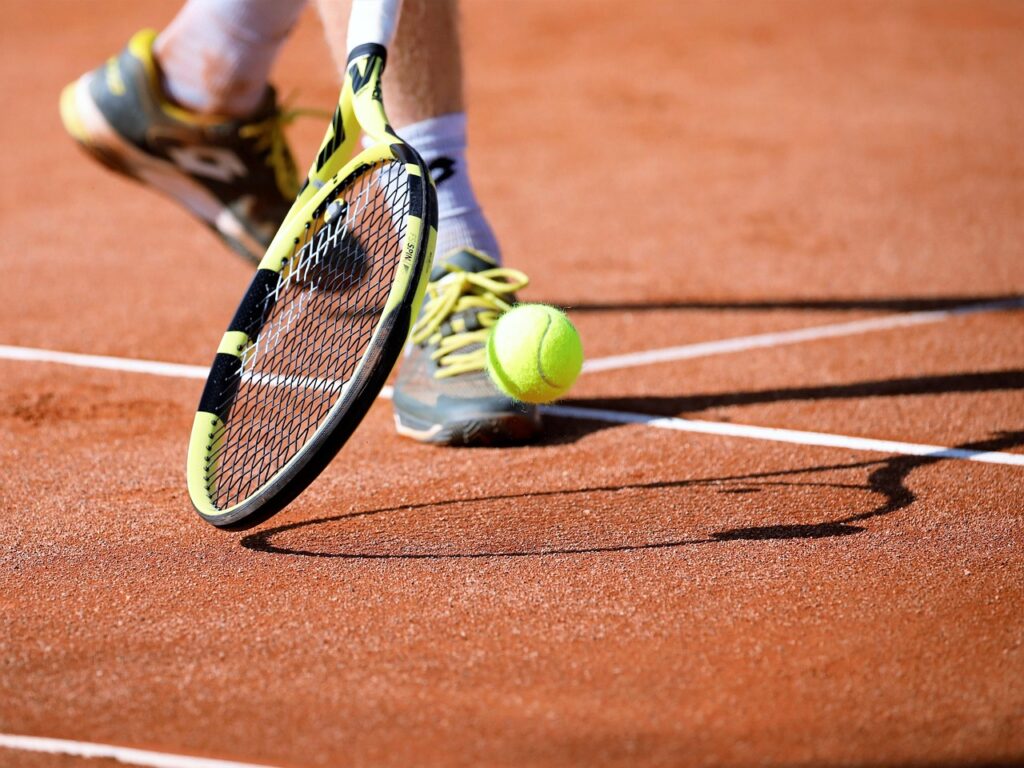
Madrid is the strangest stop on the ATP and WTA clay-court calendars. The tournament is officially classified as a clay event, but the way the ball moves through the air at the Caja Mágica looks closer to hard-court tennis than to anything you’d see at Roland Garros. The reason is altitude. Madrid sits 667 metres above sea level — the highest-elevation Masters 1000 venue in the world — and that single number changes nearly every part of how a clay-court match is played here.
The Madrid Open clay court at the Caja Mágica looks like clay, plays like hard court, and produces the kind of upset patterns that make seeded players nervous. Cam Norrie reaching the fourth round this week to face Jannik Sinner is exactly the kind of result Madrid produces. Carlos Alcaraz, the home favourite, withdrew with a wrist injury before the tournament started — a decision that would have made less sense in Monte Carlo or Paris. This is the guide to why Madrid plays differently, and what that means for serve-first players, baseline grinders, and everyone in between.
- The Madrid Open clay court plays faster than Monte Carlo or Roland Garros because of its 667-metre altitude.
- Thinner air reduces ball drag, so serves and groundstrokes travel through the court 8-12% faster than at sea level.
- Madrid suits big servers and aggressive baseliners more than traditional clay specialists.
What Is the Madrid Open Clay Court?
The Madrid Open clay court is the playing surface at the Caja Mágica in Madrid, Spain, where the Mutua Madrid Open is staged each spring. The tournament is a Masters 1000 event on the ATP Tour and a WTA 1000 on the women’s calendar. It runs from late April into early May, sandwiched between Monte Carlo and Roland Garros on the European clay-court swing. The 2026 edition runs April 22 to May 3 and features the standard 96-player main draw on both tours.
The court itself is built using crushed brick mixed with limestone, the standard formula for European red clay. The chemistry of the surface isn’t what makes Madrid different. The altitude is. At 667 metres above sea level, the air is thinner, the ball travels faster, and bounce patterns change in ways that make the surface feel closer to a fast hard court than to traditional European clay.
Caja Mágica translates to “Magic Box” in English. The complex was opened in 2009 and contains three retractable-roof show courts that allow night-session matches under cover. Manolo Santana Court is the main stadium, with a capacity of 12,500. Court 2 (Arantxa Sánchez Vicario) and Court 3 (Manolo Santana 2) handle the secondary matches. All three use the identical clay surface mix.
How Does the Madrid Open Clay Court Play Differently?
The single biggest difference is ball flight speed through the air. According to the ATP Tour, the average groundstroke at Madrid travels 8-12% faster than the same shot hit at sea-level clay courts like those at Roland Garros or Monte Carlo. The reason is air density: thinner air at altitude provides less drag on the ball, allowing it to maintain velocity longer.
That single physical fact cascades into multiple tactical changes. Serves move faster, kicking up bigger jumps off the surface. Groundstrokes sit up higher because spin doesn’t bite as hard — the lower air density reduces the Magnus effect, the physics of how spin curves a ball through the air. Drop shots travel further than expected because they don’t decelerate as quickly. Returners have less time to read patterns.
The surface also tends to dry faster than sea-level clay. The Madrid climate, combined with thinner air, evaporates moisture more quickly. By the third match of a session, the court can play noticeably faster than it did at the start. Tournament directors water the court between matches to maintain consistency, but the rhythm of the surface still shifts as the day progresses.
Madrid Open Clay Court vs Monte Carlo and Roland Garros
The three biggest clay tournaments on the European spring swing all use red clay, but they play very differently from each other.
Monte Carlo — The Slowest of the Three
Monte Carlo is staged at sea level on the French Riviera. The clay there is heavier, holds more moisture, and produces the slowest tennis on the spring calendar. Rafael Nadal, who won 11 Monte Carlo titles, played a kind of tennis that simply cannot be replicated in Madrid: long, looping topspin forehands that bounce above shoulder height and force opponents into uncomfortable backhand counter-positions.
Average rally length at Monte Carlo runs about 5.2 shots. Average rally length at Madrid runs 4.1 shots, according to ATP tracking data. The difference is significant. A point that lasts five-plus shots at Monte Carlo often becomes a four-shot exchange at Madrid because the surface rewards finishing rather than building.
Roland Garros — The Most Demanding
Roland Garros, in central Paris, is also at sea level. The Stade Roland Garros uses a slightly different clay mix that produces the highest, slowest bounces of any major tournament. Matches at Roland Garros are typically the longest of the year. The five-set format adds further duration. The Madrid Open clay court is the closest thing to Roland Garros’s surface in chemistry, but the altitude makes the matches play closer to two-set Cincinnati than to five-set Paris.
Madrid — The Outlier
Madrid is the outlier on the clay calendar. Big servers like John Isner and Reilly Opelka have historically performed better at Madrid than at any other clay event, precisely because the altitude amplifies serve speeds. Aggressive baseliners like Alexander Zverev and Casper Ruud also do well — Ruud won the 2025 Madrid title and reached the final in 2024.
The clay specialists who dominate Monte Carlo and Roland Garros sometimes struggle here. Stefanos Tsitsipas, a multiple Roland Garros semi-finalist, has never reached a Madrid final. Ben Shelton, a hard-court player on paper, made the Madrid quarter-finals in 2024 — a result that surprised everyone except those who understood the altitude effect.
Madrid Open Clay Court — What This Means for 2026
The 2026 Madrid Open is shaping up exactly as the altitude theory predicts. Carlos Alcaraz, the home favourite and a player whose game theoretically suits the surface, withdrew with a wrist injury — his second clay-season setback. Novak Djokovic also opted out of the field. Jannik Sinner, the world No. 1, has cruised through to the fourth round having dropped only one set in his last 18 matches at Masters 1000 level.
Sinner’s game at Madrid demonstrates the altitude effect in action. His backhand is one of the cleanest down-the-line shots in tennis. At sea-level clay, that shot can sit up and become returnable. At Madrid, it travels faster, dips later, and produces winners. According to ATP tracking, Sinner’s return-point conversion rate at Madrid is the highest of any clay tournament he plays.
Cam Norrie reaching the fourth round to face Sinner is the second part of the story. Norrie, a former British No. 1 who fell from the top 50 in 2025, has rebuilt his game around aggressive baseline play. His path through the draw — a straight-sets win over Thiago Tirante and a second-round upset — looks exactly like a Madrid run that an aggressive baseliner can make. The fourth round against Sinner is the ceiling test.
Our view at Unicorn Blogger: We think Madrid 2026 produces a Sinner final. The altitude rewards his ball-striking too consistently, and the field has too many absentees — Alcaraz, Djokovic — to slow him down. We’re calling Sinner to win the title, beating Casper Ruud or Alexander Zverev in the final. The bigger story will be Norrie. Even if he loses to Sinner in three sets, his return to the top 30 of the ATP rankings is now a near-certainty.
Common Mistakes Fans Make About the Madrid Open Clay Court
The first mistake is calling Madrid “slow clay”. It isn’t. The surface is technically clay by composition, but the altitude makes it play like a fast surface. Casual fans expect Roland Garros tennis here and are often surprised when matches end in straight sets with serve-and-volley patterns appearing.
The second mistake is assuming clay specialists will dominate. They don’t. Players who excel on slow clay — Tsitsipas, Lorenzo Musetti at his most patient — sometimes struggle at Madrid because the surface doesn’t reward the long topspin rallies they build their games around. Aggressive ball-strikers and big servers have a structural advantage here that they don’t have at Monte Carlo or Roland Garros.
The third mistake is overrating Madrid as a Roland Garros predictor. Just because a player wins Madrid does not mean they’ll win in Paris. Andy Murray won Madrid in 2008 but never reached the Roland Garros final. Ivan Lendl won Madrid in 1985 (when it was indoor hard court) and then won Roland Garros twice on a totally different surface. The two events are similar in name only.
Key Takeaways
- The Madrid Open clay court plays faster than other clay events because of 667-metre altitude.
- Thinner air reduces drag, increasing groundstroke and serve speeds by 8-12%.
- Big servers and aggressive baseliners have structural advantages at Madrid.
- Average rally length at Madrid is 4.1 shots compared to 5.2 at Monte Carlo.
- Madrid is a poor predictor for Roland Garros despite being on the same clay swing.
Frequently Asked Questions
Is the Madrid Open clay court the fastest clay surface on the ATP Tour?
Yes. The Madrid Open clay court is the fastest clay surface on the ATP Tour, primarily because of the venue’s 667-metre altitude. Thinner air at this elevation reduces ball drag, making groundstrokes and serves travel 8-12% faster than at sea-level clay events like Monte Carlo or Roland Garros. The surface chemistry is identical — only the altitude makes the difference.
Why does the Madrid Open clay court play so differently from other clay courts?
The Madrid Open clay court plays differently because of altitude, not surface composition. The Caja Mágica sits 667 metres above sea level, the highest of any Masters 1000 venue. Reduced air density means less drag on the ball, which travels faster and produces lower bounce patterns. This shifts the tactical advantage from clay specialists to big servers and aggressive baseliners.
Who has won the Madrid Open most times?
Rafael Nadal has won the Madrid Open most times in the men’s draw, with five singles titles between 2005 and 2017. Casper Ruud is the defending men’s champion after winning in 2025. The most recent home champion was Carlos Alcaraz in 2023. Most-titled women’s champion is Petra Kvitová, with three Madrid singles titles.
What surface is the Madrid Open played on?
The Madrid Open is played on red clay, the same surface composition used at Monte Carlo and Roland Garros. The Madrid Open clay court uses crushed brick mixed with limestone, the European standard. The altitude of the venue — not the surface itself — is what makes Madrid play differently from other clay tournaments on the ATP Tour.
The Madrid Open clay court is the puzzle that breaks every clay-court expectation. Players who win at Monte Carlo struggle here. Players who lose early at Roland Garros sometimes make Madrid finals. The altitude is the variable that nobody talks about until matches start unfolding in unexpected ways. For more tennis coverage, see our full tennis hub, our Madrid Open 2026 preview, and our cricket coverage for cross-sport context. For full draw and live results, the official ATP Madrid 2026 page covers session schedules, while the WTA Madrid Open draws tracks the women’s main draw.