
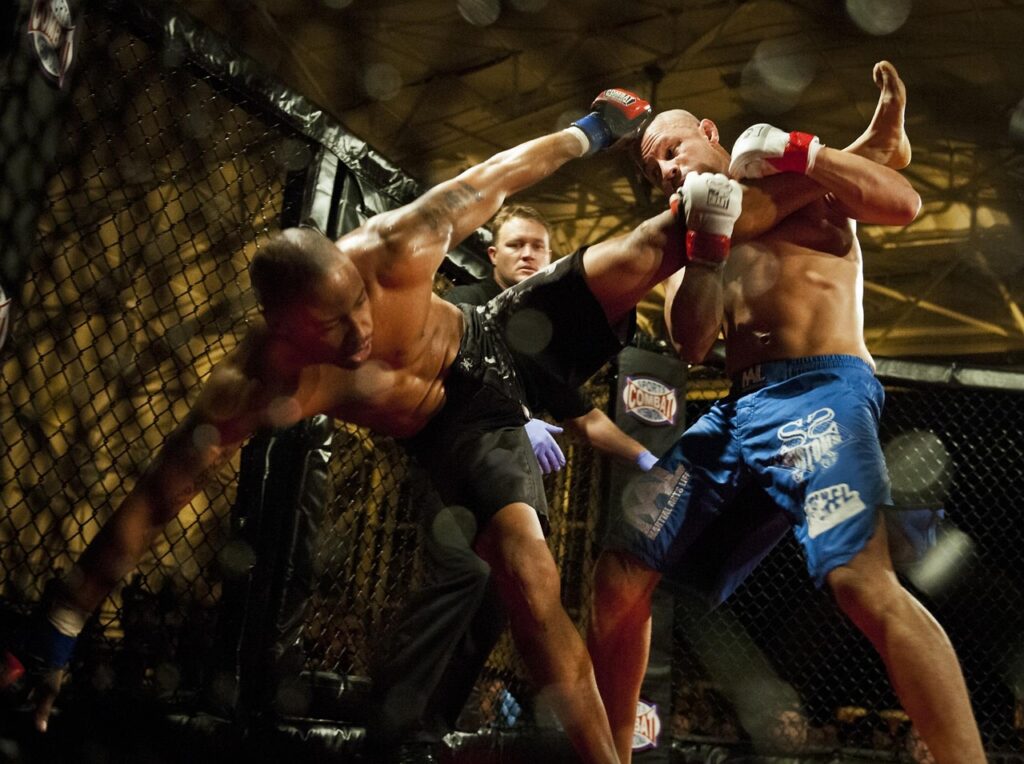
A fighter dominates for fifteen minutes, hears the final horn, raises both arms, and then loses on the judges’ scorecards. It happens more often than it should, and every time it does, the same question follows: how is MMA actually scored?
This guide explains how MMA scoring works, from the ten-point must system to the criteria judges are supposed to follow, and why so many decisions end in argument. Once you know the rules, the controversies make a lot more sense.
- MMA uses the ten-point must system, with the round winner getting 10 points.
- Three judges score each round independently, usually 10-9 or 10-8.
- Judges weigh effective striking and grappling first, then aggression and control.
What the ten-point must system actually means
Almost every MMA fight that reaches the final bell is scored using the ten-point must system, borrowed from boxing. The name describes the core rule: the judge must award ten points to the fighter who wins the round. The loser receives nine or fewer, depending on how one-sided the round was.
Our view at Unicorn Blogger is that this borrowed system is the single biggest source of confusion in the sport, because MMA rounds are far more varied than boxing rounds. A fighter can be losing a striking exchange, then land a takedown and a submission attempt in the final minute. Cramming that complexity into a single number from ten is hard, and it is why two trained judges can watch the same round and disagree. The system is simple to state and genuinely difficult to apply.
How the scores break down round by round
Each round produces a score, and the possible numbers tell their own story. A 10-9 round is the most common, awarded when one fighter edges a competitive round. It is the baseline result of a close contest.
A 10-8 round is meant to be more frequent than it is. It should be given when a fighter wins a round clearly through significant damage, dominance or control, not only when they nearly finish the fight. For years judges treated 10-8 as reserved for near-stoppages, which distorted close fights, and the guidance has since been clarified to encourage its proper use. A 10-7 is rare, reserved for total domination, while a 10-10 even round is technically allowed but actively discouraged, since judges are expected to find a winner. Understanding these numbers is the key to reading a scorecard.
The criteria judges are supposed to follow
Under the Unified Rules of MMA, judges are told to weigh the action in a specific order, and that hierarchy matters enormously. The first and most important category is effective striking and grappling, judged on the impact and damage a fighter causes, not merely the number of strikes thrown or takedowns scored.
Only when that category is genuinely even do the lower criteria come into play. The second is effective aggressiveness, meaning meaningful forward pressure that lands, not just walking forward. The third and lowest is fighting area control, often called cage or octagon control, which covers dictating where the fight happens. The crucial point, and the one fans most often miss, is that control is the tiebreaker of last resort. A fighter who lands the harder, more damaging shots should win the round even if the opponent controlled the cage. When judges invert that order, bad decisions follow.
Why takedowns cause so many arguments
Few things spark more debate than how takedowns are scored. A common misconception is that a takedown automatically wins a round. It does not. A takedown matters only to the extent that it leads to damage, control or a genuine threat such as a submission attempt.
The problem is that takedowns are visible and dramatic, so they can sway judges who are not weighing the criteria carefully. A fighter who scores a takedown but does nothing with it, while the opponent lands sharp elbows from the bottom, has arguably lost the exchange on damage. Yet the takedown often gets rewarded anyway. This gap between what the rules say and how some judges score is at the heart of many disputed decisions, and it is why grappling-versus-striking rounds are the hardest of all to call.
The different ways a decision can land
When a fight goes the distance, the three judges’ scorecards are added up, and the result falls into one of several categories. A unanimous decision means all three judges scored the fight for the same fighter. It is the cleanest outcome and usually signals a clear winner.
A split decision means two judges favoured one fighter and the third favoured the other, a sign of a genuinely close fight. A majority decision is rarer: two judges score it for one fighter while the third scores it a draw. There are also three kinds of draw. A unanimous draw has all three judges level, a majority draw has two judges level, and a split draw occurs when the scorecards cancel out. These outcomes are uncommon, but knowing them helps make sense of the strange results that occasionally appear.
Who actually does the judging
An important detail that surprises many fans is that the judges do not work for the promotion. In most places, fights are overseen by a state or national athletic commission, an independent body that licenses and assigns the officials. The promotion does not pick who scores its fights.
This independence is meant to protect the integrity of results, but it also means judging quality varies between regions, since different commissions have different standards and training. The Unified Rules provide a common framework, adopted across most of the sport through the work of the Association of Boxing Commissions, yet interpretation still differs from one jurisdiction to the next. That patchwork is part of why a fighter might feel hard done by in one city and well treated in another.
The reforms still being debated
Scoring controversy has pushed the sport to consider changes. The most discussed is a half-point system, which would let judges award scores like 10-8.5 to capture rounds that sit between the existing numbers. Supporters argue it would reduce the all-or-nothing nature of close rounds.
Others want open scoring, where the running totals are shown to fighters and fans between rounds, so a competitor knows whether they need a finish. Critics worry that would change how fighters approach the final round, encouraging stalling from those who think they are ahead. Our read is that the clarified 10-8 guidance has already improved scoring more than fans realise, and that a half-point system is the most likely next step, because it fixes the system’s biggest flaw without rebuilding it from scratch. For more on how fighters earn their place, see our piece on why title shots should reward activity.
How MMA scoring differs from boxing
Because the ten-point must system came straight from boxing, it helps to understand why it fits MMA awkwardly. In boxing, every exchange is a strike, so comparing two fighters across a round is relatively clean. Judges weigh clean punching, defence and ring generalship, all within a single discipline.
MMA asks judges to compare things that do not share a common currency. How do you weigh a near-submission against a flurry of punches? How does a dominant minute of ground control measure against thirty seconds of damaging elbows from the bottom? Boxing never forces that question, because there is only one way to score. MMA blends striking, wrestling and grappling into a single number, and the system was never designed for that complexity. This mismatch is the root cause of most scoring disputes, and it explains why even experienced judges, applying the same rules in good faith, can reach opposite conclusions about the same round.
The patterns behind disputed decisions
Controversial scorecards tend to follow recognisable patterns rather than appearing at random. The most common is the takedown illusion, where a fighter is rewarded for a flashy takedown that produced no real damage, while the opponent’s sharper striking is overlooked. Visible action beats effective action in the eyes of a judge who is not weighing the criteria strictly.
Another recurring pattern is the underused 10-8. When a fighter wins a round overwhelmingly but does not get the wider 10-8 margin, a single competitive round elsewhere can swing the whole fight unfairly. A third pattern is the activity trap, where the busier fighter wins on volume even though the quieter fighter landed the harder, more telling blows. Spotting these patterns is the quickest way to predict which decisions will be argued about afterwards. None of them require a corrupt judge; they simply require the criteria to be applied loosely, which happens more often than the sport would like. The difference between a celebrated judge and a criticised one usually comes down to discipline: sticking to the order of the criteria even when the crowd is roaring for the more eye-catching fighter.
Why finishing the fight is the only guarantee
Every veteran fighter learns the same hard lesson: never leave it in the hands of the judges. A clean knockout or a submission ends the contest before a scorecard is ever consulted, removing the human element entirely. The cleanest way to avoid a robbery is to make the result undeniable, leaving nothing for three sets of eyes to disagree about.
This is why coaches preach urgency in the final round of a close fight. A competitor who believes the bout is even, or who suspects they are narrowly behind, is gambling everything on three judges seeing it their way. The history of the sport is full of fighters who coasted to the final horn convinced they had done enough, only to hear the wrong name announced. The scoring system, for all its flaws, rewards those who take the decision out of the judges’ hands. Until the rules are reformed, the surest path to a win remains the one that needs no scorecard at all, and the smartest fighters build their game plans around exactly that truth. It is no coincidence that the champions who last longest are usually the ones who hunt for the finish rather than managing a lead, because they have learned not to trust a system that can turn a clear performance into a defeat on a single judge’s card.
How to watch the scorecards like a judge
Once you understand the criteria, you can score along at home and predict the cards more accurately. Focus first on damage, who is landing the shots that visibly hurt, rather than who is busier. A single clean, telling blow can outweigh a flurry of glancing ones.
Next, ask what control is actually achieving. Top position on the ground means little if no damage or submission threat comes with it. Finally, treat aggression and cage control as tiebreakers, not headline categories. If you keep that order in mind, you will often find yourself agreeing with the judges who get it right, and you will spot the questionable cards before they are even read out. Our prediction is that the sport adopts some form of half-point scoring within the next several years, as the pressure from disputed decisions keeps building. For more on the contenders, see our featherweight rankings or browse the MMA section.
Frequently asked questions
Does a takedown automatically win a round in MMA? No. A takedown only counts toward the score if it leads to damage, control or a submission threat. A takedown with no follow-up can lose the exchange to a fighter landing strikes.
What is a 10-8 round? A 10-8 round is awarded when a fighter wins clearly through significant damage, dominance or control, not only when they almost finish the fight.
Who employs the MMA judges? Independent athletic commissions, not the promotion, license and assign the judges, which is meant to keep results impartial.
Where can I read the official rules? The UFC site and ESPN MMA outline the Unified Rules and scoring criteria in detail.
Want a different sport’s rule breakdown? Read our guide to how the FIFA World Rankings work.
n
Related: 10 Most Famous MMA Fighters of All Time: The Definitive List
n
Related: Ulberg ACL Injury UFC LHW: Interim Title Now | Unicorn Blogger