
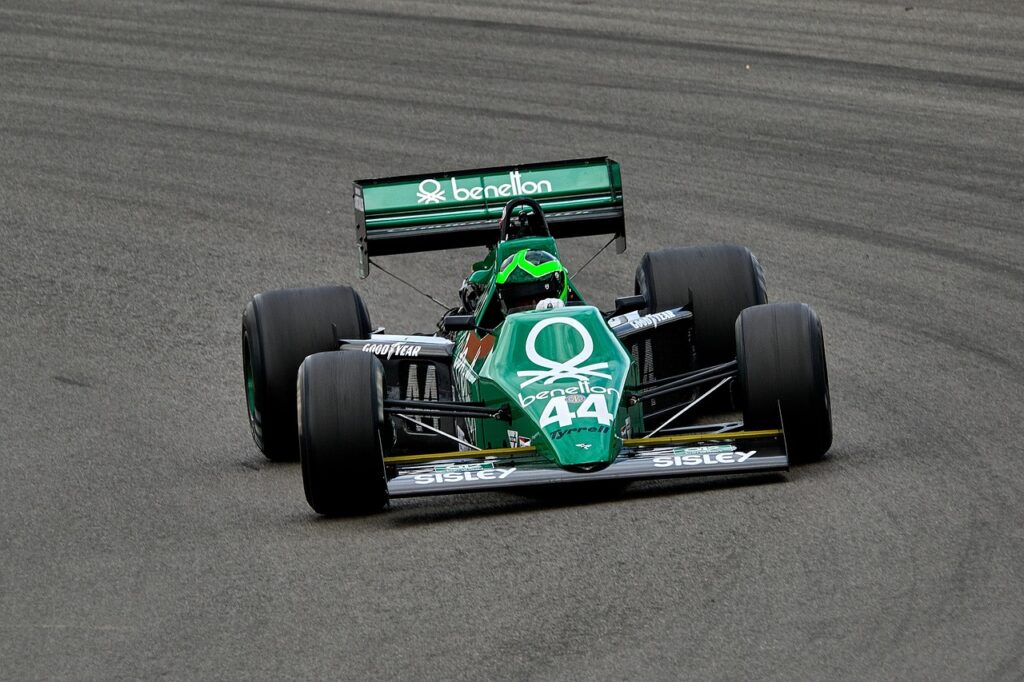
The race gets the glory, but qualifying often decides it. On a Saturday afternoon, twenty of the fastest drivers on earth get a handful of laps to settle who starts where, and at some circuits the grid all but writes the result.
This guide explains how F1 qualifying works, from the three knockout segments to the tactics that decide pole position, and why a single clean lap can shape an entire weekend. Once you understand the format, Saturdays become as gripping as the race itself.
- F1 qualifying has three knockout segments: Q1, Q2 and Q3.
- Five cars are eliminated after Q1 and again after Q2.
- The top ten fight for pole position in Q3, the fastest lap winning.
What qualifying is for
Qualifying exists to set the starting order for Sunday’s race, known as the grid. The driver who sets the fastest lap starts at the very front, in pole position, with every other driver lined up behind in order of their best time. A good grid slot is worth enormous amounts, because clean air and track position are hard to recover once the race begins.
Our view at Unicorn Blogger is that qualifying is the purest test in the sport. There is nowhere to hide and no strategy to fall back on, just a driver, a car and the clock. The race rewards patience and tyre management, but qualifying rewards raw speed and nerve over a single lap. That is why drivers often describe a perfect qualifying lap as the most satisfying feeling in racing.
The three knockout segments explained
Modern F1 qualifying is split into three parts, run back to back on Saturday. The format is a knockout, so the field shrinks as the session goes on, and the pressure rises with it.
Q1 lasts eighteen minutes and involves all twenty cars. At the end, the five slowest drivers are knocked out and locked into grid positions sixteen to twenty. Q2 then runs for fifteen minutes with the remaining fifteen cars, and again the five slowest are eliminated, filling positions eleven to fifteen. Finally, Q3 is a twelve-minute shootout between the fastest ten cars, deciding pole position and the top ten on the grid. Each segment resets, so a driver who scraped through Q1 in fifteenth can still fight for pole if they find pace when it matters. The format is simple to follow and brutally unforgiving, because one mistake at the wrong moment ends your session.
Why track position is everything
The reason qualifying matters so much comes down to how hard it is to overtake in modern Formula 1. The cars are wide, the aerodynamics are sensitive to following another car closely, and at some circuits passing is nearly impossible without a mistake ahead. Starting at the front means controlling your own race.
Nowhere is this clearer than at a tight street circuit like Monaco, where pole position is often described as half the victory because overtaking is so rare. On those weekends, Saturday effectively becomes the main event. Even at tracks where passing is easier, a front-row start means cleaner air, less tyre wear in traffic, and first call on pit strategy. The grid is not just a starting order; it is a head start that the best teams guard fiercely.
The tactics behind a fast lap
A qualifying lap looks simple from the outside, but it hides a web of decisions. Track evolution is one of the biggest. As more cars lay down rubber, the surface grips better and lap times tumble, so teams often want to run as late as possible in each segment to catch the fastest version of the track.
That creates its own danger. Leave a lap too late and a yellow flag, a crash or simple traffic can ruin it, leaving no time for another attempt. Drivers also have to find clear space, because following another car closely ruins the aerodynamics and costs lap time. Tyre preparation matters too, with drivers weaving and braking on their out-lap to bring the tyres into the precise temperature window where they grip best. Get any of these elements wrong and even the fastest car can miss out. Qualifying rewards the teams that manage these variables as much as the drivers who execute the lap.
Pole position and the records that define it
Pole position is the prize every driver wants on a Saturday, and the all-time pole record is one of the sport’s most prestigious. For decades, Ayrton Senna’s tally of 65 pole positions stood as the benchmark for one-lap brilliance, a number that seemed almost untouchable.
Lewis Hamilton eventually broke it, passing Senna in 2017 and pushing the record beyond one hundred poles, a figure that redefined what was possible over a single lap. Pole does not guarantee victory, and plenty of races are won from further back, but the statistics are clear: the driver on pole wins far more often than anyone else, simply because they start with the cleanest possible path to the first corner. For more on the drivers who mastered this, see our ranking of the greatest F1 drivers of all time.
How sprint weekends change the format
Not every weekend follows the standard pattern. On selected rounds, Formula 1 runs a sprint format, which adds a short race on Saturday and reshuffles the schedule. These weekends use a separate, condensed qualifying session to set the grid for the sprint, run in the same three-part knockout style but with shorter segments.
The main Grand Prix grid on a sprint weekend is still set by a traditional qualifying session, usually held on Friday. The aim of the sprint format is to add competitive action across all three days and give fans more racing, though it remains a talking point among purists who feel it dilutes the importance of the main event. Either way, the core knockout logic stays the same, so once you understand standard qualifying, the sprint version is easy to follow.
Grid penalties and parc ferme
Qualifying does not always give the final grid, because penalties can shuffle the order afterwards. Teams that exceed their season allocation of engine components, or change a gearbox outside the rules, receive grid penalties that drop them down regardless of how they qualified. A driver can take pole and still start further back once penalties are applied.
Once qualifying begins, cars enter what is called parc ferme conditions, a rule that locks the car’s setup so teams cannot make major changes between qualifying and the race. This stops teams from running a special low-fuel setup for qualifying and then transforming the car for Sunday. It also means a driver has to live with the handling they qualified with, which adds another layer of strategy to how teams set up their cars on Friday. These rules are invisible to casual viewers but shape every decision a team makes across the weekend.
A short history of how the format evolved
The knockout format we know today is a relatively recent invention. For long stretches of the sport’s history, qualifying was a simpler affair, with drivers given a window of time to set their fastest lap and the quickest time taking pole. It worked, but it could produce quiet sessions where the best cars set a time early and parked up.
The three-part knockout arrived in 2006 and transformed Saturdays, forcing every driver to keep performing under rising pressure. There have been missteps along the way. In 2016 the sport briefly tried an elimination format that knocked drivers out at timed intervals during each segment, but it emptied the track at the worst moments and was scrapped almost immediately. That failure taught the sport a lesson: tension comes from drivers trading fast laps late in a session, not from a countdown clock. The current format has survived because it gets that balance right, and it is now firmly established as the template.
Why a single lap is so demanding
It is easy to underestimate how hard a qualifying lap is, because the best drivers make it look smooth. In reality, a qualifying lap asks a driver to extract everything from the car at the exact moment the tyres and track are at their peak, with no margin for error. A few centimetres too wide at one corner can cost a tenth of a second, and a tenth of a second can be the difference between pole position and fifth on the grid.
The tyres add a cruel complication. A Formula 1 tyre has a narrow temperature window where it grips best, and that window can last barely a single flying lap. Too cold and the car slides; too hot and the grip falls away. Drivers and engineers choreograph the entire out-lap to hit that window at precisely the right corner. Brakes face the same challenge, needing to be hot enough to bite without overheating. Stacking all of these variables into one perfect lap, while carrying the pressure of elimination, is one of the hardest things any athlete does, and it is why a great qualifying lap draws such admiration from rivals.
What qualifying reveals about race day
A sharp viewer can learn a lot about Sunday from what happens on Saturday, as long as they know what to look for. Qualifying is run with low fuel and the car set up for one fast lap, so the order does not always match race pace. A car that is rapid over one lap can fade over a long run, while a kinder car on its tyres might climb back through the field on Sunday.
This is why teams pay close attention to the long-run data from Friday practice as well as the qualifying result. A driver who qualifies third but has the strongest race pace is often better placed than the one on pole with a car that chews its tyres. Reading these signals turns qualifying from a simple grid-setter into a preview of the strategic battle to come. The grid tells you where everyone starts, but the practice and qualifying pace together hint at where they might finish, and that is the puzzle every team is trying to solve before the lights go out on Sunday afternoon.
How to watch qualifying like an expert
Once you know the format, qualifying becomes a drama in three acts. In Q1, watch the back of the grid, where smaller teams scrap to avoid elimination and a single mistake can end a promising weekend. In Q2, keep an eye on tyre choices, because the rules around which tyres carry over to the race can force teams into difficult compromises.
In Q3, the focus narrows to the pole shootout, where the very best drivers find a few tenths of a second that seem to come from nowhere. Watch how the track speeds up through the session, how drivers time their final runs, and how the order can change in the last thirty seconds. Our prediction is that F1 will keep experimenting with the sprint and qualifying formats over the coming seasons, but the core three-part knockout is here to stay, because it produces tension that a simple time trial never could. For more on the season ahead, see our 2026 storylines and browse the motorsport section.
Frequently asked questions
How long is each part of F1 qualifying? Q1 lasts eighteen minutes, Q2 lasts fifteen minutes, and Q3 lasts twelve minutes, with five cars eliminated after both Q1 and Q2.
What is pole position? Pole position is the first place on the starting grid, awarded to the driver who sets the fastest lap in Q3. It offers the cleanest run to the first corner.
Does the pole-sitter always win? No, but they win far more often than any other starting position, because track position is so valuable and overtaking in modern F1 is difficult.
Where can I check qualifying results? The official Formula 1 site publishes full qualifying times, and the FIA issues the official classifications and any penalties.
Enjoy these explainers? Read our guide to how MMA scoring works.