
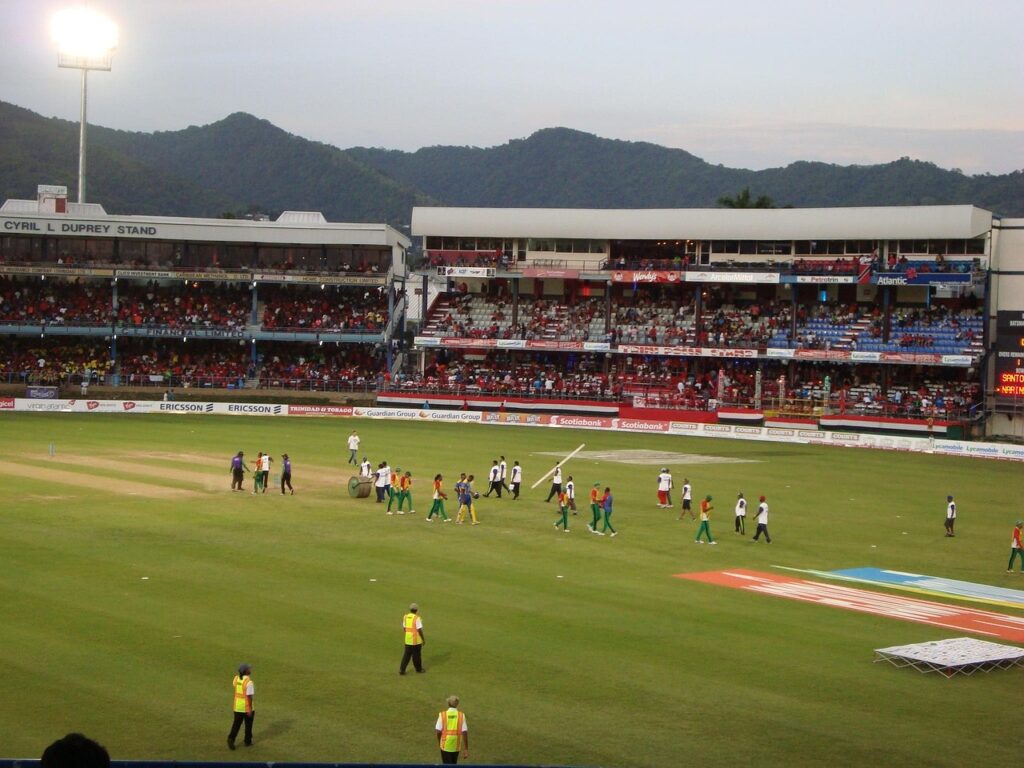
For sixteen years, one question has hung over the Women’s T20 World Cup: can anyone actually beat Australia? On June 12 at Edgbaston, twelve teams begin a three-week attempt to answer it. The Women’s T20 World Cup is back in England, the format is bigger than ever, and for once the field looks genuinely capable of toppling the champions.
- The Women’s T20 World Cup 2026 runs June 12 to July 5 across England and Wales.
- Twelve teams play 33 matches at seven venues, with the final at Lord’s on July 5.
- Australia have won six of nine editions, but New Zealand are the defending champions.
A bigger tournament, a tighter format
This is the tenth edition, and it has grown. The field is up from ten teams to twelve, split into two groups of six, with 30 group games before the knockouts. The Netherlands reach the tournament for the first time, a small but real sign that the women’s game is widening.
The format change matters more than it looks. There is no Super 8 stage this time. The top two from each group go straight to the semi-finals, which means every single group match carries weight. One bad afternoon and a favourite can be out before the knockouts even begin. England open against Sri Lanka at Edgbaston, and the final lands at Lord’s on July 5.
Our view at Unicorn Blogger: the no-Super-8 structure is the most interesting wrinkle here. It rewards consistency and punishes complacency. A side that stumbles once in the group, the way contenders sometimes do against lower-ranked opponents, may not get the second chance an extended format used to provide.
Australia: still the team to beat
Let us be honest about the starting point. Australia have won six of the nine Women’s T20 World Cups ever staged, including a run of dominance that turned the trophy into something close to their property. No other nation has won more than one.
The depth is the thing. Australia do not rely on a single match-winner; they roll out batters who clear the rope, seamers who hit the splice, and spinners who choke the middle overs, then bring more of the same off the bench. Megan Schutt sits as the tournament’s all-time leading wicket-taker with 48, a number that captures how long this side has been winning these games.
Here is the editorial read, though: dynasties end, and the cracks are showing. New Zealand already proved in 2024 that Australia can be beaten on the biggest stage. The aura is no longer bulletproof, and a field this deep will smell that.
The title count tells one story
If you want the dominance in a single picture, here it is. Across the nine editions from 2009 to 2024, four nations have lifted the trophy, and the distribution is lopsided.
England (2009) and the West Indies (2016) grabbed one each in the early years. New Zealand’s 2024 win is the most recent, and the most encouraging for everyone else, because it broke a pattern that had started to feel permanent.
The challengers lining up
Start with the holders. New Zealand arrive as defending champions, and a team that finally got over the line will not fear the moment again. They are battle-hardened in exactly the way a contender needs to be.
India are the form pick for many. They have invested heavily in their domestic structure, their batting runs deep, and they pushed England close in the warm-ups, losing by just five runs on June 10. A nation that has reached finals without ever lifting this trophy will see England and Wales as a real chance.
Then there are the hosts. England carry home advantage, familiar conditions and a passionate crowd, and they have the all-round balance to go far. South Africa, beaten finalists in recent editions, complete a genuinely strong top tier. The drop-off from first to fifth favourite is the smallest it has been in years.
The groups and the road to Lord’s
The draw has bite. Group 1 stacks Australia alongside India, South Africa, Pakistan, Bangladesh and the Netherlands, which sets up an early Australia-India heavyweight clash and a charged India-Pakistan meeting on June 14. Group 2 gathers England, New Zealand, Sri Lanka, the West Indies, Scotland and Ireland.
With only the top two from each group advancing, seeding pressure is enormous. A single slip against an associate nation could be the difference between a semi-final at The Oval and an early flight home. That is the danger the new format introduces, and it is why the so-called minnows could yet shape the tournament even if they do not win it.
The semi-finals are scheduled for the back end of June, with the winners meeting at Lord’s on July 5. For any of these teams, a final at the home of cricket is the kind of stage careers are remembered for.
The case for the most open edition yet
Put the pieces together and a picture forms. Australia remain favourites, but they are no longer untouchable. New Zealand have shown the blueprint. India have the depth. England have the conditions. South Africa have the scar tissue of near-misses that often precedes a breakthrough.
The ICC has backed the moment with a record prize pool of roughly 8.76 million US dollars, a ten percent rise on the last edition and a marker of how seriously the women’s game is now taken. Bigger stakes, a tighter format and a closer field rarely produce a procession. They produce drama.
Our analytical bottom line: this is the hardest Women’s T20 World Cup to call in over a decade, and that is exactly why it is worth watching from the first ball at Edgbaston.
How the contenders match up department by department
Trophies are won by squads with no soft spots, and that is where the gap between the top four and the rest shows up. Australia carry the most complete batting order in the women’s game: Beth Mooney and Alyssa Healy give them a settled opening pair, Ellyse Perry anchors the middle, and Ashleigh Gardner offers power from number five while doubling as a frontline off-spinner. When Megan Schutt and Darcie Brown share the new ball, there is no obvious phase of an innings where Australia can be pinned down.
India answer that with arguably the best top three on paper. Smriti Mandhana has been the most consistent T20 opener of the cycle, captain Harmanpreet Kaur sets the tempo through the middle, and Richa Ghosh has turned into a genuine finisher who clears the rope late. Their bowling leans on Deepti Sharma’s control and Renuka Singh Thakur’s swing up front. The question India keep facing is death bowling, and a few overs leaked at the back end have cost them in knockout matches before.
England sit a notch behind on depth but carry two match-winners who can decide a semi-final on their own. Nat Sciver-Brunt is the highest-rated all-rounder in the field, and Sophie Ecclestone remains the standout spinner of her generation, capable of bowling four overs through the powerplay and the middle for under a run a ball. New Zealand, the holders from 2024, are built around Sophie Devine and Amelia Kerr, and as defending champions they will not be short of belief on grounds that suit their seam-heavy attack.
What an English June does to the contest
Staging a Women’s T20 World Cup in England in June changes the calculations that usually favour the subcontinent sides. Early-summer pitches at Edgbaston, Taunton and The Oval tend to offer the seamers movement under cloud cover, then flatten out when the sun is out. That swing on day one of the tournament, with England opening against Sri Lanka on June 12, is exactly the kind of advantage Megan Schutt, Marizanne Kapp and Renuka Singh will look to use before the surfaces ease.
Conditions also reward sides that bat with patience early rather than swinging from the first over. Teams that lose three wickets inside the powerplay on a green-tinged June surface rarely recover in a 20-over innings, and that puts a premium on top-order players who can see off the new ball. It is one reason the South Africa pairing of Laura Wolvaardt and Tazmin Brits matters so much; if they survive the first six overs, South Africa become a real threat, having reached the last two global finals.
Rain is the other variable nobody can plan around. An English June can wash out an afternoon without warning, and the Duckworth-Lewis-Stern method has decided knockout cricket before. Sides with deep batting that can post a defendable total in a shortened chase, rather than relying on one set batter, hold the edge if the weather turns. Our read at Unicorn Blogger is that the conditions narrow the gap between the favourites and the chasing pack more than any recent edition.
Form guide: who is peaking at the right time
Momentum into a major tournament counts, and the contenders arrive in different shapes. Australia remain the benchmark, with six of the nine Women’s T20 World Cup titles since 2009 and a habit of finding their best cricket in the back half of an event. Beating them over the course of a tournament has only happened when an opponent removes their top order cheaply, which is rare.
India have spent the cycle closing the distance, and their younger players have added the fearlessness that earlier squads lacked in finals. England, under the captaincy of Nat Sciver-Brunt, have rebuilt since their 2023 disappointment and play in home conditions they know better than anyone. The West Indies, led by Hayley Matthews, can beat any side on their day, while Sri Lanka’s Chamari Athapaththu is the kind of player who can win a group game single-handedly and reshape a table.
The chasing teams matter too. Pakistan, Bangladesh and Ireland will fancy an upset in the group stage, and in a 12-team field split into two groups of six, one shock result can send a fancied side home early. That format leaves no room for a slow start, which is why the opening week of the Women’s T20 World Cup may tell us more about the eventual winner than any pre-tournament ranking.
Add it all up and the 2026 edition looks more open at the top than the title count suggests. Australia start as favourites, India and England are the clearest threats, and New Zealand, South Africa and the West Indies each have the match-winners to reach a semi-final. The team that handles the early English conditions and keeps its nerve in a knockout, rather than the one with the longest history, is likely to lift the trophy at Lord’s on July 5.
Key numbers before the first ball
- 6 — Women’s T20 World Cup titles for Australia, three times more than the rest of the world combined.
- 12 — teams in 2026, up from ten, the largest field in the event’s history.
- 33 — matches across seven venues in 24 days, ending at Lord’s on July 5.
- 48 — Megan Schutt’s record wicket tally in the competition, the most by any bowler.
- 1,216 — Suzie Bates’ record run tally, the most by any batter in tournament history.
Our prediction
Australia start as favourites and their depth still terrifies, but we keep coming back to how close the chasing pack now is. We expect a semi-final field of Australia, India, England and New Zealand, with the final genuinely up for grabs.
Prediction: India to reach the final and push Australia to the wire at Lord’s, with the holders New Zealand the dark horse to spring another surprise.
Frequently asked questions
When does the Women’s T20 World Cup 2026 start?
June 12, 2026, with England facing Sri Lanka at Edgbaston. The tournament runs until the final at Lord’s on July 5.
How many teams are in the 2026 Women’s T20 World Cup?
Twelve, up from ten, split into two groups of six. The top two from each group reach the semi-finals.
Who are the defending champions?
New Zealand, who won their first title at the 2024 edition in the UAE.
Who has won the most Women’s T20 World Cups?
Australia, with six titles. England, the West Indies and New Zealand have one each.
For more cricket, see our 2026 T20I team rankings, our breakdown of the IPL 2026 playoff scenarios, and the full cricket section. Following the summer’s other giants? Here is our 2026 World Cup football guide.
For the official schedule, squads and live scores, see the ICC Women’s T20 World Cup hub and ESPNcricinfo.