
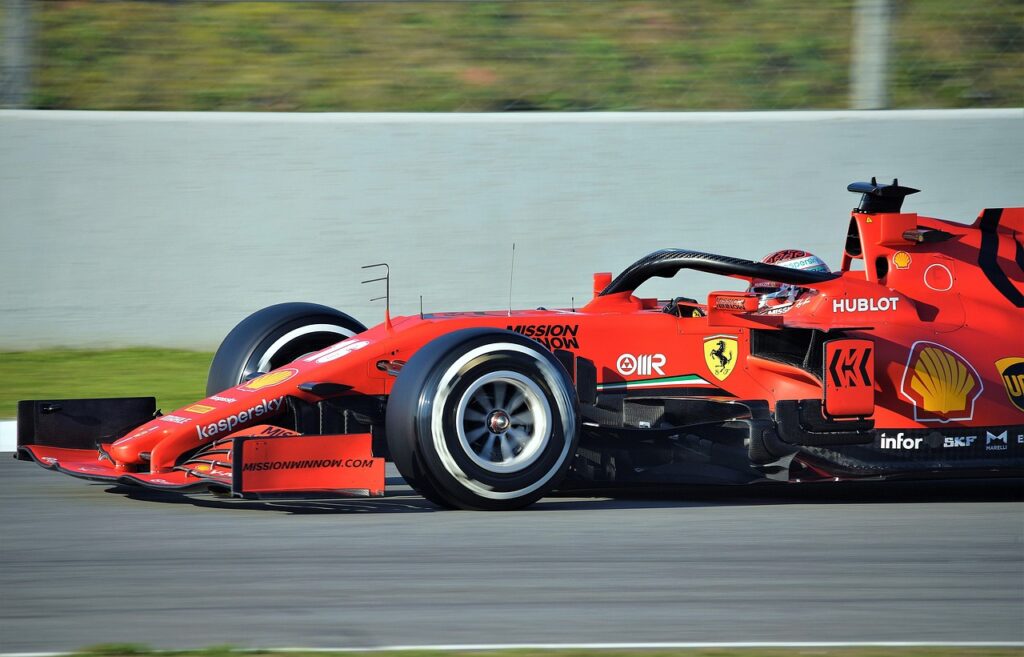
- Monza is F1’s fastest circuit, with cars on full throttle for roughly 80% of every lap
- Known as the “Temple of Speed,” it has hosted the Italian Grand Prix almost every year since 1950
- Hamilton and Schumacher jointly hold the record with five wins each at Monza
Every F1 season has one weekend that feels different from the other twenty-three, and at the Autodromo Nazionale Monza, that difference is pure speed. This guide to how Monza works covers the history, the layout, and why the “Temple of Speed” remains one of the most demanding tests on the calendar — for cars, for drivers, and for the strategy calls that decide who wins there.
A Track Almost as Old as the Sport Itself
Monza opened its doors on 3 September 1922, just a week before it hosted that year’s Italian Grand Prix — making the circuit older than Formula 1 itself by nearly three decades. It was part of the original F1 World Championship calendar in 1950 and has held the Italian Grand Prix every year since, bar one. That kind of continuity is rare in modern motorsport, where calendars rotate and circuits fall in and out of favour; Monza has simply never needed replacing.
The circuit sits inside a former royal park north of Milan, and that setting is part of what makes it feel unlike any other stop on the calendar — a permanent racing facility carved into parkland rather than a purpose-built modern complex on the edge of a city. Locals call it “La Pista Magica,” the magic track, and the nickname has stuck for a reason: nowhere else on the calendar rewards raw straight-line speed quite like this.
Reading a Monza Lap, Corner by Corner
Understanding how Monza works means understanding its handful of genuinely distinct sections, because unlike a technical street circuit, this track is really defined by only a few corners rather than a continuous flow of turns. The lap starts with the Rettifilo chicane right after the start/finish straight — a hard, late-braking zone that’s produced more first-lap contact than almost any other corner on the calendar, simply because cars arrive at such high speed after a full-throttle blast from the grid.
From there, the track opens back up toward Curva Grande, a flat-out right-hander taken at enormous speed before the second chicane at Roggia slows things down again. The Lesmo corners that follow are among the circuit’s oldest features, dating back to the track’s earliest configurations, and they demand genuine commitment from drivers even at reduced speed because a mistake there costs significant lap time on a track where every tenth matters. The lap closes with the Parabolica — officially renamed in honour of Michele Alboreto but still known by its old name to most fans — a long, banked-feeling right-hander that leads straight back onto the pit straight at full throttle.
What ties all of this together is the sheer proportion of the lap spent at maximum speed between these braking zones. A driver who nails the exit of Parabolica carries that speed advantage the entire length of the front straight, which is why qualifying at Monza often comes down to tenths gained purely through exit speed out of the final corner rather than outright pace through the technical sections.
The Strategic Puzzle Behind the Straight-Line Speed
Because Monza rewards low drag so heavily, teams face a genuine trade-off that doesn’t exist at most other circuits: run the smallest rear wing possible for maximum straight-line speed, and accept reduced cornering grip and worse braking stability into the chicanes, or compromise toward a slightly larger wing for a more balanced car through the twisty sections at the cost of top speed on the straights. Getting that trade-off right is arguably the single biggest differentiator between a strong and a mediocre Monza weekend for any given team, more so than at almost any other stop on the calendar.
Tyre strategy compounds the puzzle. The heavy braking zones into the chicanes put unusual stress on the front tyres despite the circuit’s overall low cornering-load profile, and teams have to balance that wear pattern against the temptation to run the lowest possible downforce for outright speed. Slipstreaming battles down the two long straights also make overtaking genuinely achievable at Monza in a way it isn’t at more technical circuits — DRS zones here are some of the most effective on the calendar, because a car with a clean run out of the final corner can genuinely close and pass on the approach to the first chicane.
Why Monza’s History Still Shapes How Teams Approach It
Monza’s status as one of the original tracks from F1’s inaugural 1950 season means it’s absorbed technical changes that have reshaped the sport more visibly than most circuits — chicanes weren’t part of the original 1922 layout at all, and were added over the decades specifically to slow cars down after speeds became genuinely dangerous on what was originally an almost entirely flat-out oval-and-road-course hybrid. That history is a big part of why Monza still feels different from a modern, purpose-built circuit: its layout is a series of compromises added incrementally over a century, rather than a single coherent design built from scratch with contemporary safety standards in mind from day one.
That evolution hasn’t dulled the character of the place. If anything, the contrast between the circuit’s flat-out, century-old DNA and the safety-driven chicanes bolted on over the decades is exactly what makes Monza feel like nowhere else — a track that’s been dragged, corner by corner, into the modern era while never losing the raw speed identity it opened with in 1922.
Why Monza Is Called the Temple of Speed
The numbers back up the nickname. Cars are on full throttle for roughly 80% of a lap around Monza’s 5.793-kilometre layout, and they hit their top speed on the circuit’s 1.1-kilometre start/finish straight. Lando Norris’s average speed during a recent pole lap came in at 263 km/h — a figure that gives some sense of just how little time drivers spend braking compared to a typical F1 circuit.
From the front straight, cars roar into the historic park section, where a series of hard stops into tight chicanes give the brakes a genuine workout after all that top-speed running. That contrast — sustained full-throttle straights followed by brutal chicane braking zones — is what makes Monza uniquely punishing on a car’s braking system even as it’s one of the lightest circuits on the calendar for cornering load. Teams run their lowest-downforce aerodynamic packages of the season here, trading cornering grip for straight-line speed, because at Monza the straights simply matter more than anywhere else.
The Race Weekend Format
A modern Monza weekend follows F1’s standard schedule: two practice sessions on Friday, a final practice hour and qualifying on Saturday, and the race itself on Sunday afternoon. The 2026 edition ran across September 4-6, with FP1 at 12:30pm local time Friday, FP2 at 4:00pm, and qualifying Saturday at 4:00pm following a final hour of practice at 12:30pm. The race covers 53 laps of the full circuit — 306.72 kilometres in total — typically completed in under an hour and a quarter given the speeds involved.
Conditions at Monza in early September are usually warm, with temperatures regularly reaching 30°C across the weekend and minimal rain risk, though the circuit has produced wet-weather chaos before when a storm does roll through. F2 typically supports the main event on the same weekend, adding another full grid of cars for fans making the trip.
The Tifosi and Ferrari’s Home Race
No discussion of how Monza works is complete without the Tifosi — Ferrari’s passionate home fans, who turn the circuit into a sea of red every September regardless of where the team sits in the championship. Attendance at Monza regularly exceeds 300,000 across the weekend, among the highest of any race on the calendar, and the noise when a Ferrari takes pole or wins is unlike anything else in the sport. Charles Leclerc’s victories at Monza in 2019 and 2024 both produced scenes that have become part of F1 folklore, and it’s easy to see why: a home win here means more to Ferrari than almost any other result on the calendar, championship position aside.
Records and Legends
Lewis Hamilton and Michael Schumacher jointly hold the record for most wins at Monza, with five each — a number that reflects both drivers’ longevity at the top of the sport as much as any specific mastery of the layout. Recent seasons have continued to produce serious speed records here: Monza has seen new marks set for the fastest pole position lap, fastest race lap, fastest winning race time, and fastest average race speed, underlining that even as F1 cars have grown heavier and more complex over the hybrid era, this circuit keeps finding a way to get faster.
Source: Formula1.com official circuit data
Where the 2026 Title Race Stands Heading Into Monza
This year’s visit to Monza arrives with the championship picture still very much alive. Kimi Antonelli holds a 59-point lead over both his Mercedes teammate George Russell and Ferrari’s Lewis Hamilton, who sit level in the standings behind him. McLaren’s Lando Norris enters the weekend in form, having sealed back-to-back victories for the first time in 2026 heading into the second half of the season. A low-downforce circuit like Monza tends to reward whichever power unit is strongest in a straight line, which makes the weekend a genuine data point on the pecking order heading into the season’s closing stretch — not just a procession dictated by the points table.
Our View at Unicorn Blogger
What makes Monza worth understanding beyond the raw statistics is how differently it separates the field compared to a typical modern circuit. Downforce-heavy tracks tend to reward the most aerodynamically sophisticated car everywhere on the lap; Monza rewards raw power and a low-drag setup specifically, which occasionally shuffles the competitive order in ways a street circuit or a technical track wouldn’t. That’s exactly why a home Ferrari win here, or a surprise pole from a team that’s struggled elsewhere this season, means something different than it would at almost any other stop on the calendar.
Full timing data and official race weekend schedules are available at Formula1.com, and for background on the circuit’s engineering evolution, the official Autodromo Nazionale Monza site covers the track’s century of history in more depth.
Key Takeaways
- Monza opened in 1922 and has hosted the Italian Grand Prix nearly every year since 1950
- Cars run at full throttle for roughly 80% of a lap, making it F1’s fastest circuit
- Lewis Hamilton and Michael Schumacher share the record with five Monza wins each
- The race covers 53 laps and 306.72 kilometres, typically completed in just over an hour
- Teams run their lowest-downforce setups of the season here, trading cornering grip for straight-line speed
Frequently Asked Questions
Why is Monza called the Temple of Speed?
Monza earns the nickname because cars spend roughly 80% of each lap at full throttle, the highest proportion of any circuit on the F1 calendar, thanks to its long straights and low-downforce layout.
Who holds the record for most wins at Monza?
Lewis Hamilton and Michael Schumacher jointly hold the record with five Italian Grand Prix wins each at Monza.
How long is the Monza circuit and how many laps does the race run?
The circuit measures 5.793 kilometres per lap, and the Italian Grand Prix runs 53 laps for a total race distance of 306.72 kilometres.
When did Monza first host a Formula 1 race?
Monza opened in 1922 and became part of the original Formula 1 World Championship calendar in 1950, hosting the Italian Grand Prix in all but one season since.
Sources used in this article:
- [1] Formula1.com — official Monza circuit guide and race weekend schedule
- [2] Wikipedia — Italian Grand Prix historical race records
For more on this season’s title fight, read our breakdown of who really leads the 2026 championship, our explainer on how F1 qualifying works, and our ranking of the greatest F1 drivers of all time. Follow every session on our Motorsport category page or via official timing at Formula1.com and ESPN.